Hot water PenrithBlocked drainBathroom renovationGas fittingSt Marys
Service · Hot water systems
Hot water out? Ring the workshop
Hot water in Penrith, properly done.
No hot water at all, not hot enough, leaking from the base, or the water’s gone rusty. Whatever the symptom, the diagnosis comes back to the same handful of causes. We repair, replace and install across electric, gas, heat pump and solar for homes and small commercial sites across the Penrith LGA and Western Sydney.
Hot water problems sound dramatic but usually trace back to one of four scenarios. Quick read of the symptoms so you know roughly what you’re dealing with before you ring.
Symptom 01
No hot water at all.
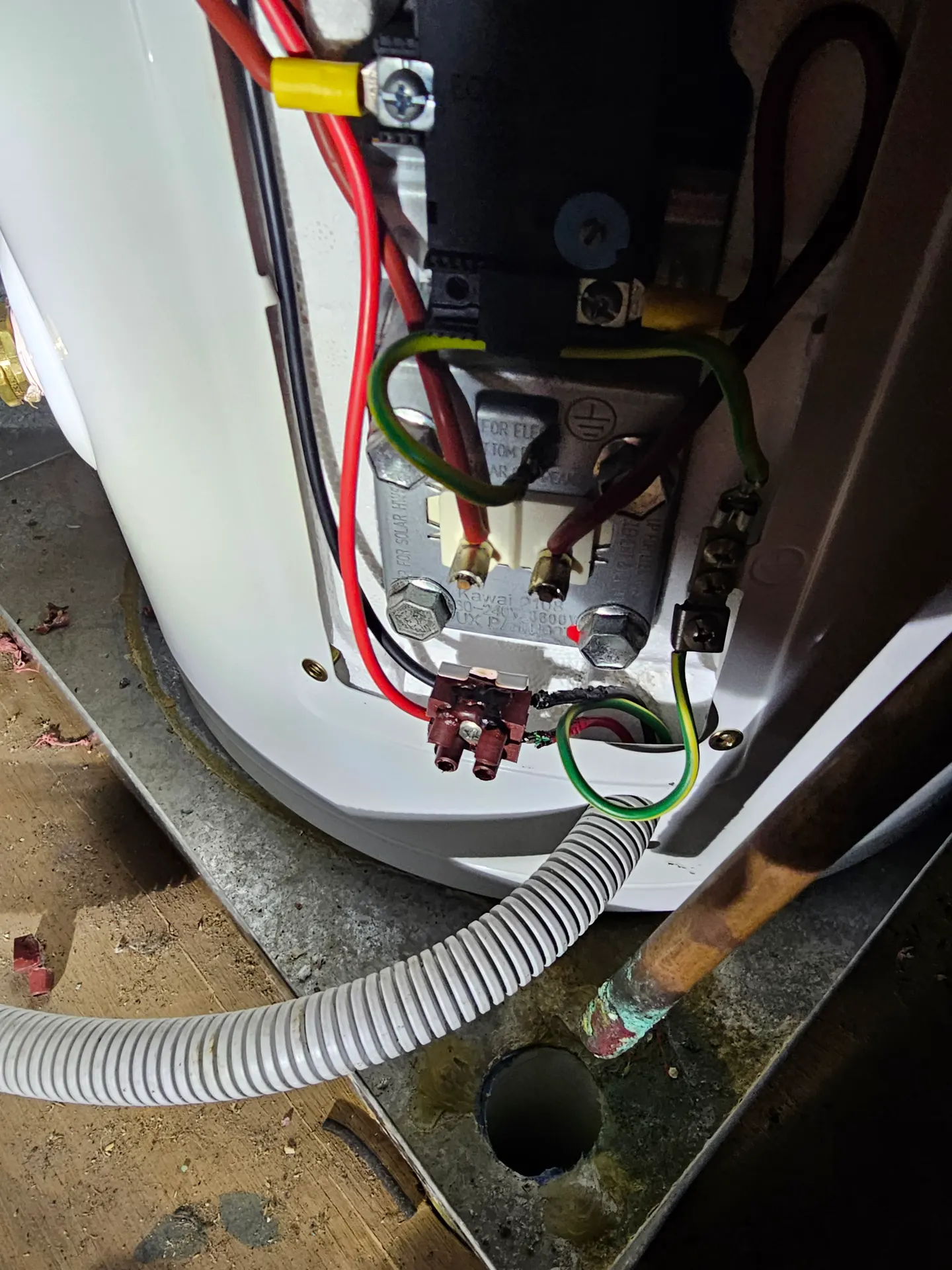
Cold shower, cold tap, every outlet. Heating element gone, pilot out, gas valve failed, or the unit is end-of-life and there’s no economical fix.
Most common cause
Heating element or thermostat failure. Often repairable on the spot if the tank itself is sound.
Symptom 02
Not hot enough.
Lukewarm shower, runs out after one person, takes forever to recover. Usually thermostat drift, undersized for the household, or a failing booster.
Most common cause
Sediment build-up insulating the heating element, or a thermostat that’s drifted out of spec.
Symptom 03
Water on the floor, leaking unit.
Drips from the base, puddle under the tank, pressure relief valve dumping water constantly. Usually the tank itself has gone, or a valve has failed.
Most common cause
Tank corrosion through (replacement) or a failed pressure/temperature relief valve (repairable).
Symptom 04
Rusty or smelly hot water.
Tinted water from hot taps, metallic taste, rotten-egg smell. Tank is either corroding internally or has dirt and sediment in it from a burst water main further up the street.
Most common cause
Rusty tank approaching end of life, or sediment from a mains burst that needs the tank drained and flushed.
Symptom doesn’t quite match? Ring the workshop and describe what you’re seeing. Quote always free.
Call · 0412 045 854
§03 / Choosing a system
The four system types, compared honestly.
Every brand has a marketing department, every supplier has a preferred line. What’s actually best for your place depends on three things: roof orientation, gas connection, and how many people use the hot water. Here’s the honest version.
Type 01 / Electric storage
Electric storage tank.
The default for most older Penrith homes. Tank with an electric element. Cheapest to install, most expensive to run unless you’re on off-peak.
Typical lifespan
8 to 12 years
Install from
[$ TBC]
Pros
Lowest upfront cost
Works anywhere, no gas needed
Cheap on off-peak tariffs
Cons
Most expensive to run on standard tariff
Slow recovery once tank empties
Larger tanks take up space
Best for
Smaller households on off-peak tariffs, or properties without a gas connection where heat pump payback doesn’t stack up.
Type 02 / Gas continuous flow
Gas continuous flow.
Wall-mounted, heats on demand, no tank to leak. The workhorse choice for most Western Sydney homes with gas connected, especially renovations.
Typical lifespan
12 to 15 years
Install from
[$ TBC]
Pros
Endless hot water (won’t run out)
Compact wall-mount, no floor space
Lower running cost than electric
Cons
Requires gas connection
Cold-water sandwich if cycled rapidly
Won’t run during a blackout (electric ignition)
Best for
Families and renovation builds with gas already in. The most common replacement we install in Penrith.
Type 03 / Heat pump
Heat pump (electric).
The fast-growing category. Runs on electricity but pulls heat from the surrounding air. Three to four times more efficient than a standard electric tank.
Typical lifespan
10 to 15 years
Install from
[$ TBC]
Pros
Lowest running cost (with solar feed)
No gas needed
Government rebates may apply
Cons
Higher upfront cost
Larger outdoor footprint
Compressor noise (low but not zero)
Best for
All-electric homes, solar households, anyone replacing an end-of-life electric tank where running cost matters.
Note: PVS doesn’t handle the STC rebate paperwork directly. You’ll need an accredited installer or admin service for the rebate, which we can recommend.
Type 04 / Solar thermal
Solar thermal.
Roof panels that heat water directly, with an electric or gas booster for overcast days. Long payback period, biggest install upfront, lowest running cost once it’s in.
Typical lifespan
15 to 20 years
Install from
[$ TBC]
Pros
Lowest running cost long-term
Long lifespan
Excellent in Western Sydney sun
Cons
Highest upfront cost
Requires unshaded north-facing roof
Booster needed for winter / overcast runs
Best for
Homeowners staying long-term, with the right roof orientation, who want lowest running cost over 15+ years.
§04 / The Western Sydney reality
Penrith heat is brutal on tanks.
Most hot water units are rated for the average Australian climate. Penrith is hotter than that — five to seven degrees hotter than the city on a 35-degree day. The unit on the side of your house is sitting in summer ambient temperatures the manufacturer’s rating curve didn’t quite plan for.
The result: a tank that should last twelve years often makes it to seven or eight before the element dies, the anode goes, or the tank itself starts weeping.
We see the same brands die at the same age every summer. We’d rather have that conversation with you while your unit’s still working than after it’s failed mid-shower.
For most replacements, this is what the day looks like. A few jobs run longer (different fuel type, undersized circuit, awkward access) but the shape is the same.
1
Phone diagnosis.
You tell us the symptom, brand, age and where the unit lives. We can usually narrow the fix to two scenarios on the call.
2
On-site quote.
We confirm the diagnosis, measure the fuel and pipe connections, and write a firm quote covering parts, labour and disposal.
3
Source the unit.
For most common sizes we have stock. Otherwise we collect from the supplier the same morning. You’re not waiting a week for hot water.
4
Swap, commission, test.
Isolate, drain, remove, swap, refill, purge, commission, leak test under load. Drop sheets down, old unit goes with us.
5
Walk-through & warranty.
We show you the isolation valve, hand over the user guide, and your 12-month workmanship warranty kicks in. Invoice emailed through to you.
§06 / Brands we’ll install
The names worth putting our warranty behind.
We’ve installed enough hot water units across enough Penrith homes to know which brands give us callbacks and which don’t. These are the names we’ll put our 12-month workmanship warranty behind.
Rinnai
Gas continuous flow
Thermann
Electric storage
Quantum
Heat pump
Rheem
Solar thermal
Rheem & Thermann
All formats
Rheem
Commercial
§07 / Hot water FAQ
The questions everyone asks when their hot water goes.
Direct answers from a Penrith plumber. If your question isn’t here, send it through and we’ll add it.
My hot water just stopped working. How soon can you get to it?
Ring the workshop during standard hours (7am to 4pm weekdays) and we’ll prioritise hot water failures because we know what a household without hot water feels like by day two. We don’t run a dedicated 24/7 line yet, but for hot water out we’ll do everything we can to slot you in as quickly as the diary allows.
Repair or replace?
If the tank itself is sound (no leaks, no rust through, less than ten years old) and a single component has failed (element, thermostat, valve), repair is usually the right call. If the tank is leaking, more than twelve years old, or the second component to fail in twelve months, replacement makes more financial sense. We’ll lay out both options with prices and our honest recommendation, no pressure.
Why is my hot water rusty or smelly all of a sudden?
Two most common causes. Either your tank’s internal lining is corroding (which usually means end of life and replacement) or there’s been a water main burst somewhere in your area and sediment has been pushed through the network into your tank. The second one is fixable: we drain the tank, flush it through, and the smell and discoloration go with the sediment. Usually a one-visit job.
Should I switch from gas to electric? Or to a heat pump?
It depends on your roof, your existing gas connection, and how long you plan to stay in the home. Heat pumps make great sense for solar households and all-electric homes. Gas continuous flow is still the most reliable workhorse if you’ve got gas connected and value endless hot water. We’ll work through the comparison with you on site, including running costs, not just the upfront install.
Do you handle the STC government rebate paperwork for heat pumps?
No, we’re not registered on the STC system. The rebate paperwork needs to be lodged by an accredited installer or admin service. If your install qualifies, we can recommend a partner that handles the rebate side while we handle the install. The rebate isn’t tied to who turns the spanner, so this is normal.
What size unit do I need?
For storage tanks, count outlets and people. Two people, one bathroom: 125-160L is usually enough. Family of four: 250-315L. Six-plus: 315L or bigger, or switch to continuous flow which doesn’t run out. We’ll size it on the site visit based on how your household actually uses water, not just headcount.
What’s the warranty?
12 months on our workmanship, parts and labour both. If anything we did fails inside that window, we come back and fix it free. The unit itself comes with the manufacturer’s warranty (usually 5-10 years on the tank, 1-2 years on components). We hand over the documentation and handle the claim on your behalf if the unit fails inside its warranty.
§08 / Get hot water back
Cold shower this morning? Talk to us.
Ring the workshop and tell us the symptom, brand and age. We’ll usually narrow the fix to two scenarios on the call and book the visit on the spot.