Hot water PenrithBlocked drainBathroom renovationGas fittingSt Marys
Service · Backflow prevention
Accredited backflow plumber · NSW Lic 309265C
Backflow protection, installed and certified.
Site protection at the meter, zone protection inside the boundary, and annual compliance testing lodged with Sydney Water and your local water authority. Accredited backflow plumber, full inspection and testing records kept on file, renewal reminders sent before your annual due date.
Backflow prevention assemblyZone and site backflow protection
§02 / Why you’re on this page
Four reasons you need a backflow plumber.
Backflow work falls into four predictable triggers. Some are new builds, some are annual renewals, some are a failed test on the clock. Quick read on which one you’re dealing with.
Scenario 01
New site install.
Council, your water authority or your engineer has specified a backflow device on a new build, fit-out or change of use. Hazard rating dictates the device type.
What’s needed
Sized and installed boundary or zone device, commissioned and lodged before occupancy or trade approval.
Scenario 02
Annual due date.
Your testable backflow device is approaching its annual compliance window. It needs to be tested by an accredited plumber and the results lodged with the water authority.
What’s needed
On-site test, certificate produced, lodgement with Sydney Water on your behalf, reminder set for next year.
Scenario 03
Failed test result.
The device didn’t pass its annual test. Internal seal failure, check valve worn, relief valve sticking. It needs repair or replacement before it can be recertified.
What’s needed
Fix-or-replace call, sourced from major manufacturers, retest and re-lodge the certificate.
Scenario 04
Hazard rating audit.
Your site has been reassessed (new process, new chemical, new tenant) and the existing protection no longer suits the hazard rating. Upgrade required.
What’s needed
Reassessment against AS/NZS 3500.1, sized upgrade (often low or medium up to high hazard), commissioned and lodged.
Who this is for
Industrial sites, commercial properties, body corporates and any premises with a testable backflow device. If you’ve received a notice from Sydney Water about an upcoming annual test, your engineer has flagged backflow on a new build, or your existing device has failed, this is the page. We’re an accredited backflow plumber and we lodge testing results directly with the water authority on your behalf.
§03 / The four scopes
From the meter to the recycled water line.
Backflow work splits into four scopes. Each is sized to the hazard rating and the location on your site. Here’s what each one actually involves.
Scope 01 / Site protection
Boundary install.
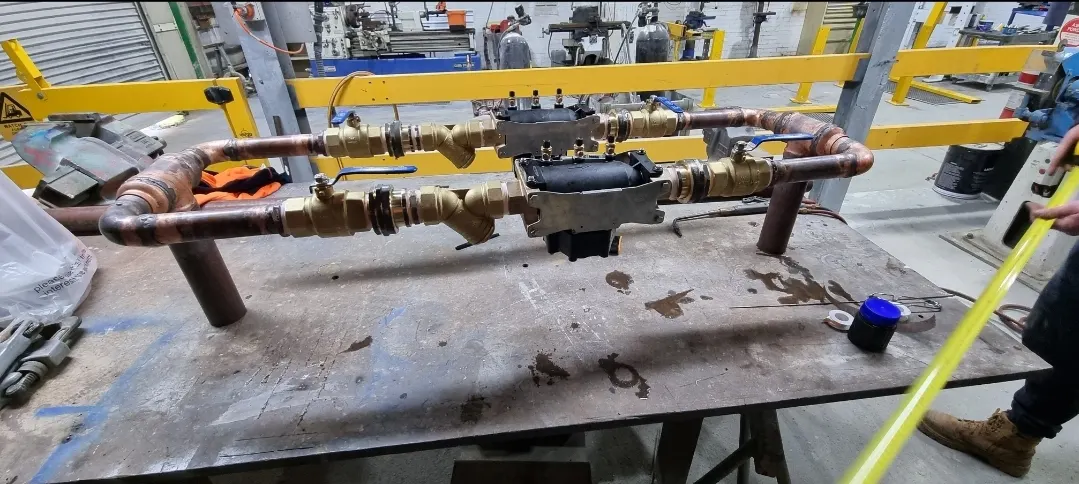
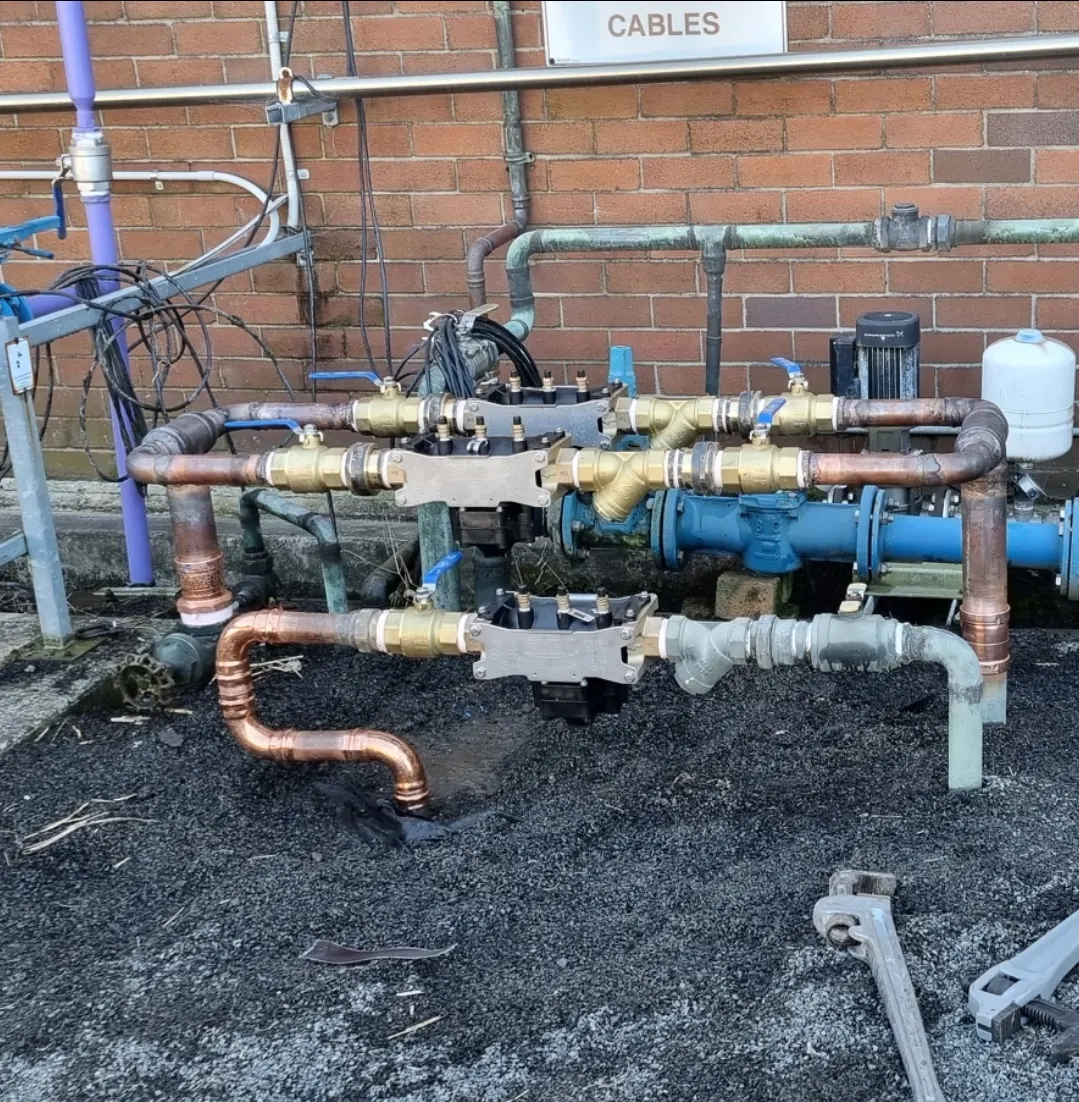
Boundary backflow assembly between the water meter and the property, sized to the service and hazard rating. RPZ for high hazard, DCV for medium, dual-check arrangements for low. This is the assembly Sydney Water sees on the site plan.
Time on tools
4 to 8 hours
Sized to
Hazard rating
We cover
RPZ / DCV / SCDCV install
Pipework, valves, strainers
Commission, test, lodge
Worth flagging
Sized to AS/NZS 3500.1
Brass body devices preferred
Access for annual testing matters
Best for
New industrial builds, commercial fit-outs, change-of-use sites where the water authority has issued a backflow requirement.
Scope 02 / Zone protection
Internal zone install.
Backflow on specific zones inside the boundary: chemical dosing, cooling tower makeup, recycled water connection, irrigation tap-off, fire service header. Each zone gets a device matched to its own hazard rating, not the site’s average.
Time on tools
3 to 6 hours
Per zone
Sized separately
We cover
Cooling tower & chemical lines
Recycled water connections
Irrigation, fire, process zones
Worth flagging
Each zone rated separately
RPZ needs a tundish & drain
Isolation valves either side
Best for
Manufacturing sites with chemical processes, cooling towers, recycled water systems, or any zone that’s a higher hazard than the rest of the site.
Scope 03 / Annual testing
Compliance test & lodge.
Testable backflow devices must be tested annually by an accredited plumber, results lodged with the water authority. We test, generate the certificate, lodge it directly with Sydney Water, and add the device to our reminder system for next year.
Frequency
Yearly
Per device
30 to 60 min
We cover
Accredited backflow testing
Certificate generation
Lodgement with Sydney Water
Worth flagging
Brief water shutdown required
Failed devices need repair to recertify
Next due date booked into our system
Best for
Any property with a testable RPZ or DCV. Long-running industrial accounts (Yates, Knauf, Veolia, Brickworks sites) sit on our annual reminder list.
Scope 04 / Replace & repair
Failed device fix or replace.
A failed annual test puts the device in a fix-or-replace decision. Cartridge kits and seal sets for newer devices, full replacement for older or heavily worn assemblies. Sourced from the major manufacturers and re-certified on the same visit where stock allows.
Time on tools
2 to 5 hours
Recertification
On the visit
We cover
Cartridge & seal kit repairs
Full assembly replacement
Retest, recertify, re-lodge
Worth flagging
Stock dependent for same-visit
Old devices may be obsolete
Like-for-like or upgrade quoted
Best for
Failed annual test, weeping RPZ relief valve, internal corrosion, or an end-of-life assembly that’s no longer economic to keep repairing.
§04 / Western Sydney compliance
Sydney Water sets the rules.
Across Greater Sydney, Sydney Water sets the backflow framework and accepts the lodged test results. Hazard ratings (low, medium, high) drive what device is required, where it sits, and how often it needs to be tested.
A small café and a chemical-handling factory sit on opposite ends of the same rulebook. The café might need a single dual-check at the meter; the factory needs site protection plus zone protection on every chemical, cooling tower and recycled water line.
The pattern we see most: a site grows or changes process and the original device is now undersized for the hazard rating. We handle both ends, café through to heavy industrial, and have long-running accounts with Yates Manufacturing (20+ years), Knauf Gypsum (15 years), Veolia (10 years) and the Brickworks family of sites for ongoing annual compliance.
FIG.01 / Hazard rating mix
What we actually install across Western Sydney.
% of devices on our annual register
High hazard RPZ · 44% Medium DCV · 30% Low dual check · 18% Fire / other · 8%
§05 / How a backflow job actually runs
From the hazard rating to the lodged certificate.
Every install follows the same five steps. Annual testing skips ahead to step four. Either way the certificate ends up with Sydney Water, and your next due date ends up on our calendar.
1
Site review.
On-site walk through. Identify hazard rating per AS/NZS 3500.1, agree the device type and zone strategy. Look at process water, recycled water, chemical lines and any high-risk zones.
2
Paperwork up front.
SWMS for the install, site induction where the client requires it, certificate of currency on insurances. Industrial sites get the documentation before tools come out of the ute.
3
Install or replace.
Install or replace the device (RPZ, DCV, SCDCV or break tank), sized correctly, with isolation valves and a tundish drain where the device requires it. Brass body assemblies preferred.
4
Commission & lodge.
Commission the device, run the accredited test, generate the certificate, lodge it with Sydney Water and your local water authority. You get a copy for your compliance file.
5
Annual reminder.
The device goes onto our annual reminder system. You get a heads-up before the next due date so the test happens inside the compliance window. 12-month workmanship warranty on the install.
§06 / Device manufacturers
What we install and stock.
We work across the major backflow manufacturers used in Sydney commercial and industrial work. Common cartridge and seal kits kept in the van so failed annual tests can often be repaired and recertified the same visit.
Watts
RPZ, DCV
Apollo Conbraco
RPZ, DCV
Wilkins / Zurn
RPZ
Honeywell Braukmann
RPZ
Caleffi
DCV
AVK
Boundary assemblies
§07 / Backflow FAQ
The questions compliance managers ask.
Direct answers from an accredited backflow plumber. If your question isn’t here, send it through and we’ll add it.
Is annual testing legally required?
Yes. Testable backflow prevention devices (RPZ, DCV and similar) must be tested annually by an accredited plumber, with the results lodged with the relevant water authority. Across Greater Sydney that’s Sydney Water. Missing the annual test puts the property out of compliance and Sydney Water can issue notices or escalate. We hold the accreditation, run the test, and lodge the certificate on your behalf.
What happens if a device fails its annual test?
A failed test means the device isn’t providing the protection it’s meant to. The fix is either a cartridge or seal kit repair, or a full assembly replacement if the device is at end of life. We carry common kits in the van, so a lot of failures are repaired and recertified the same visit. Bigger replacements get quoted, sourced from the manufacturer, and re-tested once installed. The recertification then gets lodged with Sydney Water like any other annual test.
Do you lodge the test results with Sydney Water for me?
Yes. Lodgement is part of the job, not a separate task you need to chase. We generate the test certificate on site, lodge it through the appropriate channel with Sydney Water, and email you a copy for your compliance file. You don’t need to log into anything or forward anything. The device shows up as current on the water authority’s records and stays that way until next year.
What hazard rating applies to my site?
Hazard rating is set by the activity on the site, not the building type. AS/NZS 3500.1 gives the framework. A general office is usually low hazard. A factory with chemical dosing, cooling towers or recycled water is high hazard. A commercial kitchen, irrigation system or auto workshop typically sits at medium. We walk the site, identify each hazard zone, and recommend the device type that matches. If the water authority has issued a specific requirement letter, we work to that.
What’s the difference between site protection and zone protection?
Site protection is the boundary assembly between the water meter and the rest of the property. It protects Sydney Water’s mains from anything happening inside your site. Zone protection is internal: separate devices on specific zones (cooling tower, chemical, recycled water, irrigation, fire) that protect the rest of your own building from those higher-hazard zones. Most industrial sites need both. Site protection is sized to the worst hazard on the property; zone protection lets you keep the boundary device smaller and isolate the risky zone properly.
Do you stock common replacement devices?
Common cartridge and seal kits for Watts, Apollo, Wilkins, Honeywell and Caleffi, yes. Full assembly replacements are usually ordered to size from the manufacturer or the trade wholesalers we use, which is normally one or two business days. If you’re on a compliance deadline, tell us early and we’ll prioritise the order and the recertification visit.
Can you take over an existing schedule from a previous plumber?
Yes, this is one of the most common ways accounts start with us. We pull the current device list from Sydney Water, walk the site to confirm what’s there against what’s lodged, take over the annual reminder schedule, and you keep the same due dates without a compliance gap. Long-tenure industrial accounts like Yates, Knauf and Veolia run this way: the device register sits on our system and the next test goes in the diary the moment this one’s lodged.
What’s covered by the 12-month workmanship warranty?
12 months on the workmanship of any install or replacement we do, parts and labour. If a connection we made or an assembly we fitted fails inside that window from a workmanship cause, we come back and fix it. Annual testing isn’t a warrantied scope (it’s a measurement against a standard, not a workmanship outcome), but the install behind it is. Manufacturer warranty on the device itself runs separately and is whatever the maker states.
§08 / Book the test, or the install
Annual due date approaching? Get it booked.
Ring the workshop, send the device details, or upload the Sydney Water reminder letter through the contact form. We’ll confirm the device on site, run the test, lodge the certificate and put you on the reminder list for next year.