Hot water PenrithBlocked drainBathroom renovationGas fittingSt Marys
Service · Process water systems
Industrial accounts · SWMS & certs lodged
Process water systems, built to standard.
Potable and non-potable water lines, process water reticulation, plant feed, cooling water, compressed air and gas service lines, and zone-isolated reticulation across copper, stainless steel, HDPE, PE, PEX and aluminium. Installed to AS/NZS 3500 and your engineering spec, with backflow protection where the service crosses a hazard rating.
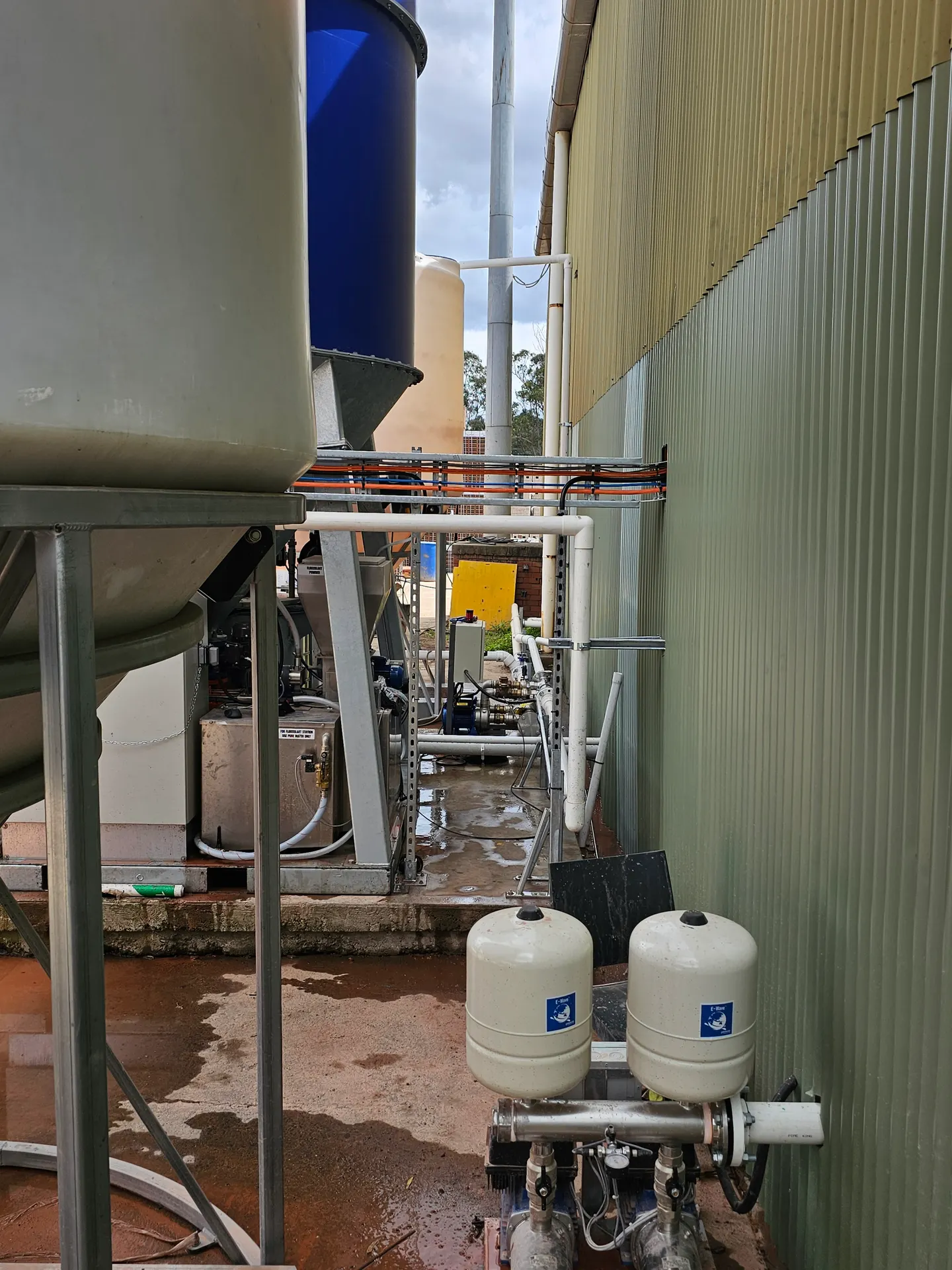
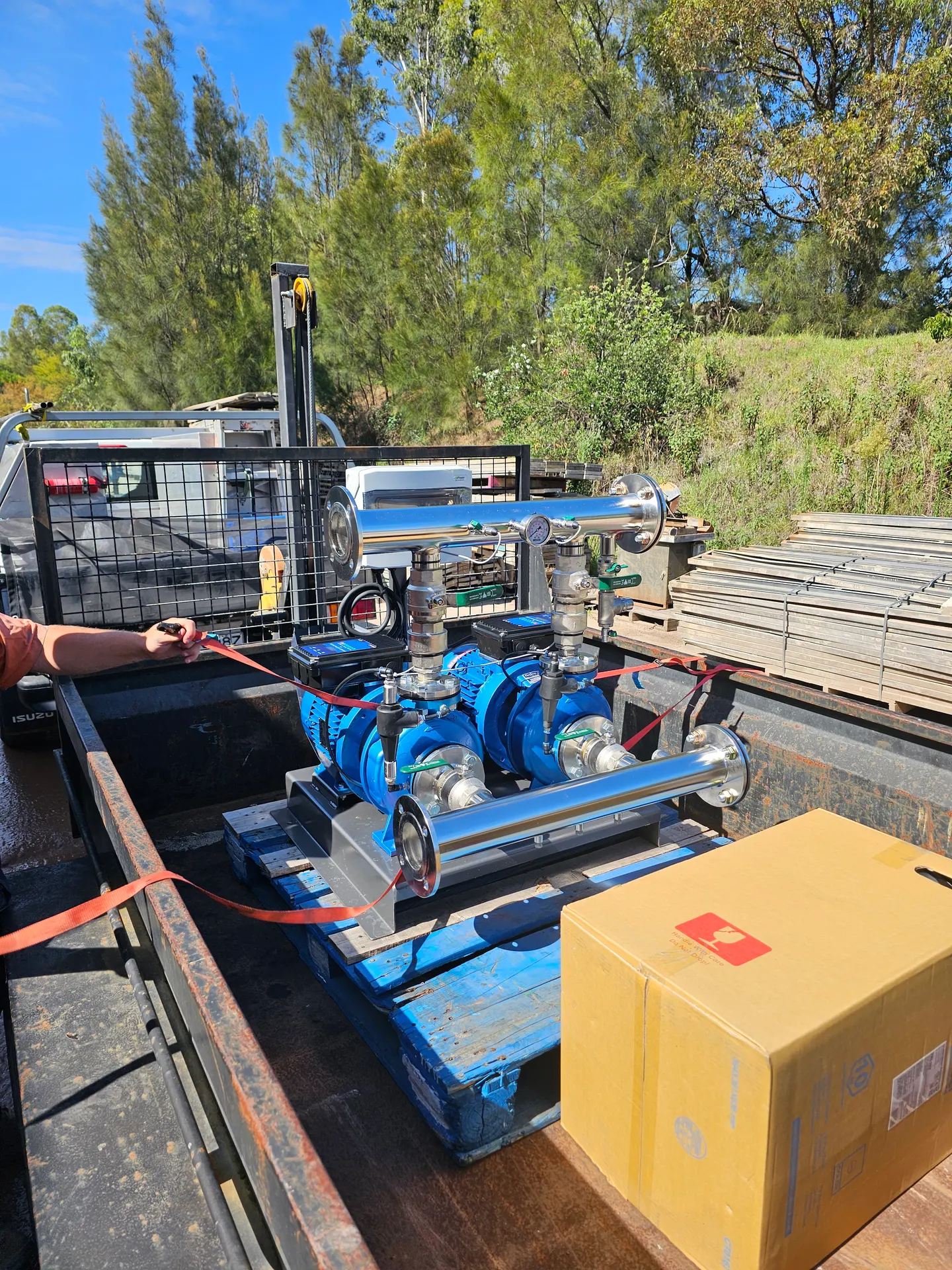
Process water filtration skidProcess water pump set
§02 / Why you’re on this page
Four reasons engineering rings us.
Process water work usually starts with a deadline (new plant going in), a problem (failing reticulation), or a compliance flag (identification audit or backflow exposure). Here’s the version we hear most.
Scenario 01
New process line.
Engineering has a new piece of plant coming in and needs feed water (potable or otherwise) at a defined connection point by a target date. Pressure, flow rate and isolation already spec’d.
What we deliver
Material selection, route, isolation strategy and a fixed install window that lines up with your commissioning date.
Scenario 02
Failing reticulation.
Burst frequency on aged galvanised or AC pipe is rising. Each repair takes a line out, slows production, and the next one is a question of when not if. The line needs replacing, not patching.
What we deliver
Section-by-section replacement plan that keeps production running, with isolation valves added so future repairs hit a smaller footprint.
Scenario 03
Identification audit flagged.
Auditor or council has flagged unclear identification on existing non-potable or process water lines. Site needs lines tagged and identified per AS 1345 before sign-off.
What we deliver
Survey of existing services, purple-lilac identification on non-potable lines, flow-direction arrows and pipe-content labels per AS 1345.
Scenario 04
Backflow exposure.
Sydney Water or council has advised the site needs zone or site-level backflow because a hazard rating applies. A boundary or zone backflow device is required to keep contamination off the drinking water network.
What we deliver
Hazard rating confirmation, device specification, install, commissioning test and annual test certificate lodged with the water authority.
What this service covers (and doesn’t)
We do industrial process services: potable, non-potable, process, cooling and plant feed water, plus compressed air and gas service lines. Copper, stainless, HDPE, PE, PEX, PVC, aluminium. Backflow installation, testing and certification where the hazard rating requires it. Specialist and medical gas systems and trenchless renewal sit outside our scope. If the job crosses into one of those, we’ll tell you straight on the site walk and refer to a specialist trade.
§03 / The four scopes
From a single plant feed to a full site ring main.
Most industrial water work falls into one of four scopes. Each has a different design, install footprint and certification path. Here’s how we approach each one.
Scope 01 / Potable
Potable water reticulation.
Site mains, internal ring mains, drinking water to amenities and food-grade tap points. Designed for pressure, flow and isolation, with backflow protection where the service crosses a hazard rating into a process zone.
Standard
AS/NZS 3500.1
Materials
Copper, PEX, SS
We cover
Site mains and ring mains
Zone isolation valves
Backflow install & testing
Worth flagging
Pressure test as part of commissioning
Test certificates when required
Authority sign-off can add lead time
Best for
New amenities blocks, plant ring mains, factory expansion potable feeds, or replacing aged galvanised drinking water lines section by section.
Scope 02 / Non-potable
Non-potable & process water.
Recycled water, cooling water, washdown lines and process water reticulation. Clearly identified per AS 1345 with purple-lilac banding, flow-direction arrows and content labels, so there is no chance of cross-contamination with potable services.
Identification
AS 1345
Materials
HDPE, PE, SS
We cover
Recycled and cooling water lines
Washdown reticulation
Purple-lilac identification
Worth flagging
Separation distance from potable
Audit-ready labels on every drop
Process temp may dictate material
Best for
Manufacturing sites running recycled or process water, washdown for food and beverage areas, or compliance work after an identification audit.
Scope 03 / Plant feed
Plant feed lines.
Dedicated water service to a specific piece of plant. Isolation at the takeoff, instrumentation tappings for pressure and flow, gauges where engineering wants visibility. Lockable isolation for shutdowns.
Isolation
Lockable
Instrumentation
Spec’d
We cover
Dedicated takeoff & isolation
Gauge and instrument tappings
Lock-out tag-out points
Worth flagging
Plant commissioning window matters
Flexible connections at the machine
Vibration isolation if required
Best for
New plant installs (brick presses, extruders, packaging lines, cooling towers), engineering upgrades, or relocating a machine to a new bay.
Scope 04 / Upgrades
Reticulation upgrades.
Extending or re-zoning an existing reticulation network, replacing failed sections of aged steel or AC pipe, capping and isolating abandoned runs so they don’t become a dead-leg or a corrosion risk to the live system.
Approach
Staged
Downtime
Minimised
We cover
Network extension & re-zoning
Failed section replacement
Dead-leg capping & isolation
Worth flagging
Old as-builts often missing detail
Hidden services need locator survey
Updated as-builts issued on completion
Best for
Sites with a mix of pipe vintages where the live network needs to keep running while sections are progressively replaced or extended into a new bay.
§04 / The Western Sydney reality
Industrial estates, mixed pipe vintages.
Wetherill Park, Smithfield, Eastern Creek, Penrith. The Western Sydney industrial corridor runs the gamut from 1970s galvanised mains through to modern HDPE drops put in last year. Most factory sites are working with what’s there, not a greenfield install.
Our approach: survey what exists, mark up the live services properly, isolate before cutting, and replace into materials that will outlast the next reorganisation of the factory floor. We work around production, not over the top of it.
The accounts that prove it: Brickworks, Austral Bricks, Bowral Bricks, Austral Masonry, Yates Manufacturing (20+ years), Knauf Gypsum (15 years), Veolia Environmental Services (10 years), Penrith RSL Club. Long tenure on industrial reticulation is how this business runs.
FIG.01 / Pipe vintages we encounter
What’s under the slab on a typical Western Sydney site.
% of industrial reticulation jobs
Galvanised 70s · 32% AC / CICL 80s · 24% Copper 90s · 26% HDPE / PE · 18%
§05 / How a process water install actually runs
From drawing review to a clean handover.
Industrial process work is paperwork as much as pipework. The order is the same on every site: review, induct, agree the materials, install in the agreed window, commission and hand over the records the job needs.
1
Site walk & drawings.
Walk the route, review existing as-builts (where they exist), identify hazard ratings on each zone, and assess the condition of any service we’ll be tying into. Anything unclear gets flagged before we quote.
2
SWMS & induction.
Safe Work Method Statement and certificates of currency lodged ahead of the install date. Site induction completed for every operative attending. PPE matched to the site requirement.
3
Materials & isolation.
Confirm material selection (copper, stainless, HDPE, PE, PEX or aluminium) against the engineering spec. Isolation strategy agreed with the site so production knows exactly what’s down, when, and for how long.
4
Install & lock-out.
Install during the agreed window. Lock-out tag-out at every isolation. Pressure test on every new section as part of commissioning. No live cuts on a process line without sign-off.
5
Commission & handover.
Pressure-test certificates where required, and updated as-built drawings on request. 12-month workmanship warranty applies to the install. Invoice on agreed account terms.
§06 / Materials we work with
Specified to the spec.
Material selection is half the install. We work across the standard industrial range and match the material to the duty: temperature, pressure, the medium it carries and the access constraints of the route. Anything specialised (high-purity, food-grade stainless polish) is sourced through trade.
Copper
Potable, gas, instrument
Stainless steel
Process, hygienic, potable
PE
Buried mains, distribution
HDPE
Drainage, trade waste
Pressure PVC
Process water
PEX
Potable water
PVC
Waste, vent, stormwater
Aluminium
Compressed air
§07 / Process water FAQ
The questions engineering and facilities always ask.
Direct answers on standards, materials and certification. If your question isn’t here, ring the workshop and we’ll talk through it.
Can you work to AS/NZS 3500 and our internal engineering spec?
Yes. AS/NZS 3500 is the baseline on every install. Where your internal engineering spec is tighter (specific materials, pressure ratings, isolation philosophy, instrumentation tappings), we work to the tighter requirement. We confirm the spec in writing before we quote so there are no surprises at install time.
How do you identify non-potable and process water lines?
Per AS 1345. Non-potable and recycled water lines get purple-lilac identification along the run, with flow-direction arrows at intervals and content labels at every branch, valve and drop. Potable lines stay clearly distinct. Where existing services on site are unclear, we survey first, then label as part of the install scope.
Do you pressure test, and do you issue certificates?
Yes. Every new section of pressurised pipework gets pressure tested — it’s part of the commissioning process before the line goes back into service. Pressure test certificates are issued when the job requires them, and form part of the handover pack alongside any as-built drawings requested.
What pipe materials do you carry and recommend?
Copper, stainless steel, HDPE, PE, PEX, PVC and aluminium across the standard industrial range. Recommendation depends on duty: copper, PEX or stainless for potable and clean water, stainless for hygienic process, PE for buried mains and distribution, HDPE for drainage and trade waste, pressure PVC for process water, PVC for waste and vents, and aluminium for compressed air. Where your engineering team has already specified, we install to the spec.
Do you run gas and compressed air lines too?
Yes. Alongside water reticulation we install and extend compressed air lines (aluminium and copper) and gas service lines to plant and amenities, licensed and to standard. Specialist and medical gas systems sit outside our scope — if a job needs one, we’ll flag it on the site walk and refer you to the right trade.
Do you handle backflow where the service crosses a hazard rating?
Yes. Where the hazard rating on a zone requires backflow protection, we specify and install the right device for the rating (testable RPZ, double-check, dual-check), commission it, and lodge the test certificate with the water authority. Annual retest is on a maintenance schedule so the device stays compliant.
Can you work in shutdowns or out of standard hours?
Yes. Standard hours are 7am to 4pm weekdays, but shutdown work, weekend windows and after-hours installs are part of the industrial workload. Rates uplift outside standard hours, agreed up front, and the install plan is built around the production calendar so cuts happen when you can afford the downtime.
What’s covered by the 12-month workmanship warranty?
Workmanship on the install: joints, fittings, fixings, and the way the system has been put together. If a workmanship issue shows up inside 12 months, we come back and fix it. Material defects fall under the manufacturer warranty, which we’ll help you claim. Wear-and-tear from the duty of the system (chemical attack, abrasion from particulates) is not a workmanship issue, but we’d flag it on the install if we thought it would be a factor.
Do you provide as-built drawings on completion?
We don’t draw up every job — as-builts are provided on a need or request basis. Where you want them, we produce a drawing showing the route, isolation valves, instrumentation tappings, materials and pipe sizes: marked up on the existing drawing for an extension, or a fresh one for a standalone install. Just flag it up front so it’s scoped in. The handover pack also includes pressure-test certificates where required and the backflow test certificate where a device was installed.
§08 / Talk to the workshop
Plant going in? Send the drawings.
Ring the workshop with the deadline, the duty and the connection points, or email the drawings and the engineering spec through. We’ll come back with a route, material recommendation and a fixed quote on letterhead.