Hot water PenrithBlocked drainBathroom renovationGas fittingSt Marys
Service · Facilities maintenance
New account enquiries · welcome
Facilities maintenance, on account.
Scheduled site plumbing, urgent callouts on account, and capital works coordination for manufacturing, hospitality, retail and warehouse sites. SWMS, certs of currency and account terms agreed up front. The same small crew on site each visit, so the building’s history walks in with us.
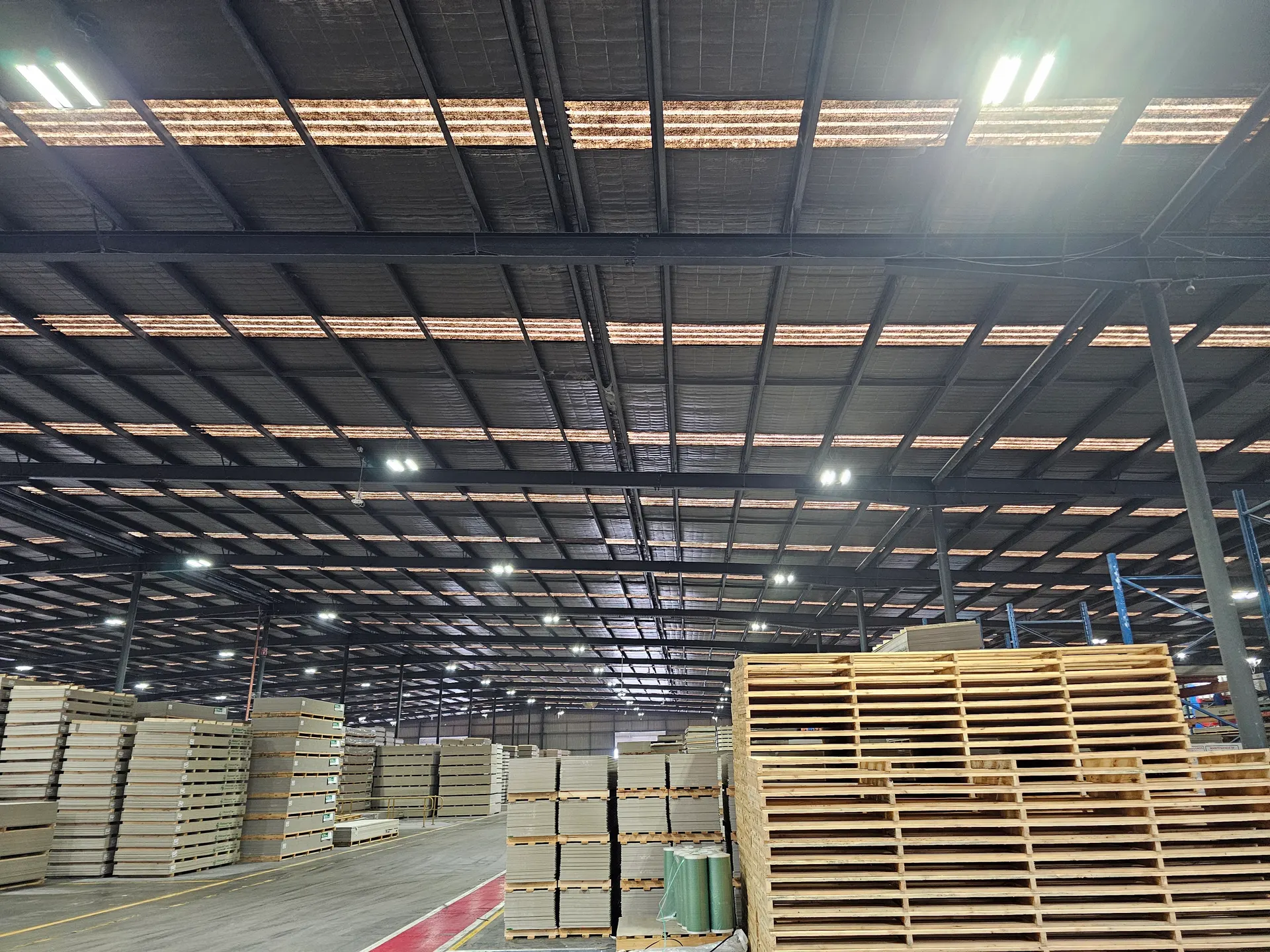
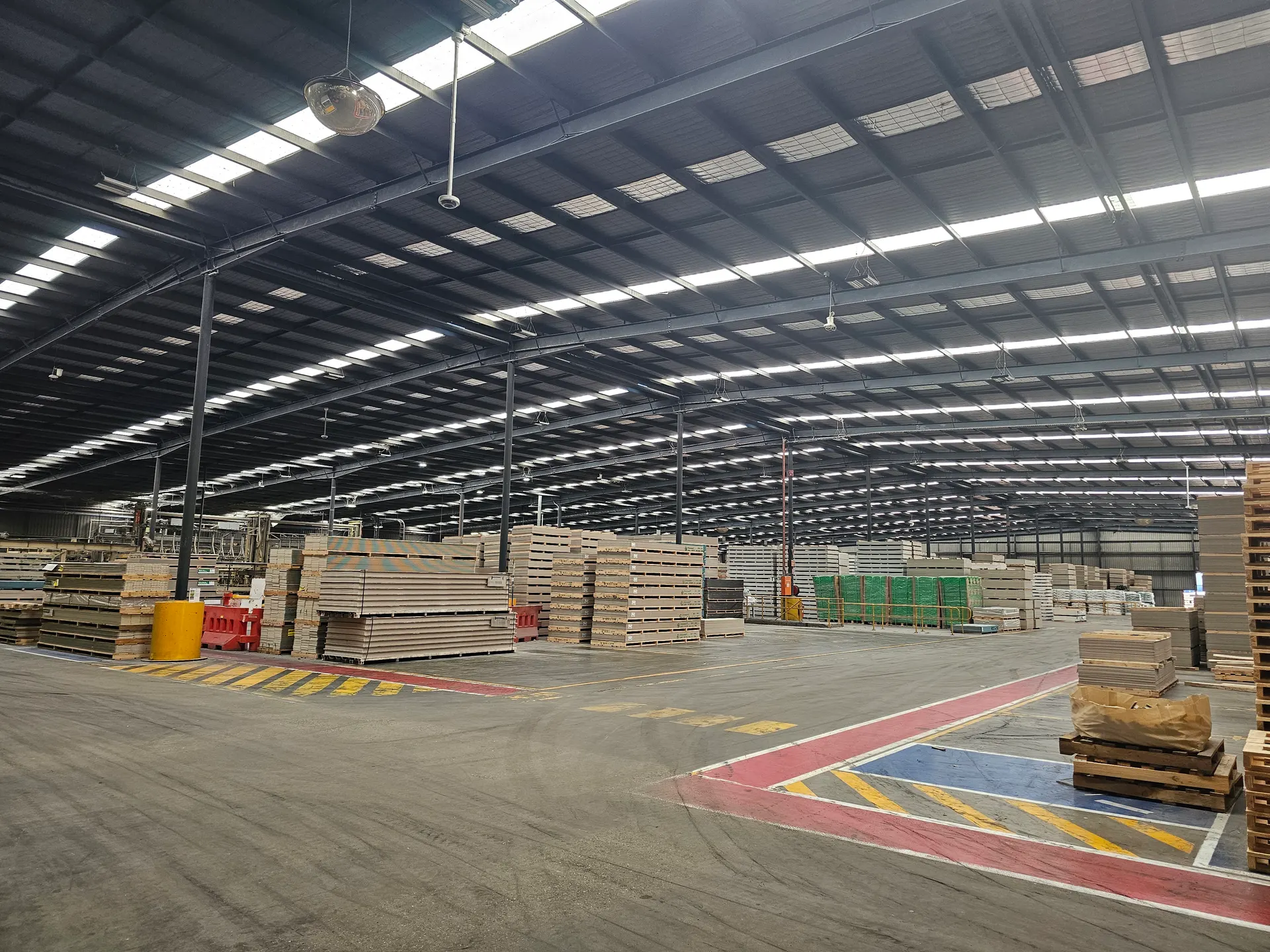
Perished fibreglass roof sheeting — beforeSheeting replaced, daylight back on the floor — after
§02 / Why you’re on this page
Four reasons facilities change plumbers.
Facilities work runs on continuity. Most new accounts come to us because the old arrangement broke down, the audit flagged something, or the portfolio grew past what a single sole-trader could carry. The four scenarios below cover most of them.
Scenario 01
Your plumber retired or moved on.
The bloke who knew the building isn’t around anymore. The drawings live in his head, not in your maintenance folder. You need a contractor who’ll walk the site, document what’s there, and carry the history forward.
What we do
Full site walk, isolation map, compliance register handover, and continuity from the first visit.
Scenario 02
Multiple sites, multiple invoices.
You’re chasing three different plumbers across four sites, each with their own paperwork format and their own quirks. You want one number to ring, one inbox for invoices, and the same standard everywhere.
What we do
Single account across the portfolio, consistent SWMS and paperwork, one accounts contact.
Scenario 03
Annual compliance got missed.
Auditor flagged your backflow register, the TMV check is overdue, or the emergency shower hasn’t been certified in a couple of years. You need someone who runs the compliance calendar, not just the reactive work.
What we do
Backflow, RPZD, TMV and emergency shower / eyewash testing on schedule, certificates issued.
Scenario 04
New site purchase or lease.
You’ve just taken on a new building. You want a plumber across the services from day one, not after the first leak. A baseline walk, a maintenance schedule, and someone on the call list before anything fails.
What we do
Baseline site walk, documented service map, agreed cadence, on the call list from week one.
What we cover (and don’t)
PVS handles the plumbing scope on a facilities account: scheduled site visits, urgent callouts on existing accounts, annual compliance testing, and capital works coordination across manufacturing, hospitality, retail and warehouse buildings. SWMS, certs of currency, account terms, induction lodgement and a documented compliance register all live in the standard pack. Other specialist trades sit outside our scope and we coordinate with the trades you already use rather than try to replace them.
§03 / The four scopes
From a quarterly walk to a capital upgrade.
A facilities maintenance account isn’t a single thing. It’s four overlapping streams of work that all run off the same account, the same paperwork, and the same crew. Here’s how each one actually sits on the calendar.
Scope 01 / Scheduled site visits
Scheduled site visits.
Agreed cadence (monthly, quarterly, annual), pre-determined scope, planned around your trading hours. We come in, work through the checklist, photograph anything outside scope for your attention, and leave a visit report behind.
Cadence
Monthly to annual
Deliverable
Visit report
We cover
Checklist agreed up front
Same crew each visit
Visit report per attendance
Worth flagging
Cadence locked in once agreed
Extras outside scope re-quoted
Best run inside trading hours
Best for
Sites where small problems compound: grease traps, urinals, hot water TMVs, isolation valves, drain runs that need eyes on them more often than once a year.
Scope 02 / Account callouts
Account callouts.
Urgent unscheduled work on existing accounts, billed to agreed terms with no per-job paperwork chase. We schedule urgent callouts on account into the next-available crew slot, including evenings or weekends at uplifted rates if the site can’t wait until the next business day.
Standard hours
7am to 4pm wkdys
Outside hours
Uplifted rates
We cover
Next-available crew slot
Billed to account terms
No new SWMS each visit
Worth flagging
Reactive repair, not warranted
Out-of-hours uplift applies
Re-quote if scope grows on site
Best for
Leaks, blockages, hot water failure, isolation valve issues, anything the site team can’t safely leave until the next routine visit.
Scope 03 / Annual compliance
Annual compliance.
Backflow, emergency shower / eyewash, RPZD, hot water TMV checks where required. Scheduled to the certification anniversaries, certificates issued on PVS letterhead, register handed back so the auditor isn’t chasing dates.
Frequency
Annual baseline
Output
Certificates + register
We cover
Backflow & RPZD testing
Emergency shower / eyewash
Hot water TMV checks
Worth flagging
Certification dates we track
Rectification billed separately
Some site-specific gear quoted
Best for
Audited buildings: aged-care, childcare, hospitality, manufacturing with chemical handling, anywhere the regulator wants paperwork on a known cadence.
Scope 04 / Capital works coordination
Capital works coordination.
Bigger upgrades, plant changes, fit-outs, sequenced around your trading day or shutdown. We carry the building knowledge in from the maintenance side so the capital job runs on the same isolation maps and the same paperwork rhythm.
Window
Planned shutdown
Handover
Report + cert
We cover
Sequencing around trading
Pre-fab where window is tight
12-month workmanship on install
Worth flagging
Quote total only, not itemised
Unforeseen work prompts re-quote
Other trades coordinated, not run
Best for
Fit-outs, plant upgrades, hot water replacements, drainage extensions and any larger capital job that has to land without disrupting the rest of the building.
§04 / The accounts that stay
Long-tenure clients are the proof.
You can’t keep an industrial maintenance account for twenty years on a sharp quote. You keep it because the plumber knows the building, because the same crew walks back in, because the paperwork is already in the contractor management system, and because there’s no re-quoting argument on every callout. The list on the right is the work, not the marketing.
Peter has been plumbing since 2000 and ran PVS since 2017. The long-tenure accounts span the whole back-catalogue of his career: brick plants in the Hawkesbury and Bowral, the Penrith club, the gypsum board factory, the environmental services depot. The reasons they’ve stayed are the same reasons new accounts come on.
Why they stay: one number, one accounts inbox, one paperwork pack, one crew with the building’s isolation map in their heads. Work to terms, no per-job paperwork chase.
Active accounts · ongoing References supplied on request
§05 / The shape of a year
Where the visits actually land on a mature account.
A facilities maintenance account isn’t all callouts. The mature ones are mostly scheduled. The figure below shows roughly how the visits split across a year on a long-tenure industrial site that’s been on the books for a decade or more.
FIG.01 / Visit mix on a mature account
Scheduled work carries the year.
% of annual visits · indicative
Scheduled visits · 55% Account callouts · 25% Compliance · 15% Capital works · 5%
§06 / Onboarding a new account
From first call to routine cadence in five steps.
Most new facilities accounts are properly bedded in inside the first month. The walk happens, the paperwork goes through, the compliance register is handed across, and the first scheduled visit goes on the calendar. After that the work just runs.
1
Site walk.
Every building, every isolation, every plant room. We document what’s there: hot water units, backflow devices, TMVs, isolation valves, grease traps, drain runs, anything that needs eyes on it again.
2
Paperwork across.
SWMS template, certs of currency, induction lodged in your contractor management system, payment terms agreed. The standard pack so site access is clean from the first scheduled visit.
3
Compliance register.
Handover of the compliance calendar: backflow dates, eyewash dates, TMV dates, hot water service dates. We carry the calendar and remind you ahead of each test rather than waiting for the auditor.
4
Cadence agreed.
Monthly, quarterly, annual schedule documented and locked into the diary. Trading hours respected, shutdown calendars noted, recurring visits planned out twelve months ahead.
5
Single contact.
One mobile, one accounts inbox, no chasing different people each time. 12-month workmanship warranty on any installs or replacements done under the account, on letterhead with the NSW licence number against the work.
§07 / Site types we look after
The buildings already on the books.
Industrial manufacturing is the core. Hospitality, retail and warehouse sit alongside it. The maintenance discipline is the same across all of them: known cadence, documented register, the same crew walking back in.
Manufacturing
Process & production sites
Hospitality
Pubs · clubs · restaurants
Retail
Cafés · tenants · salons
Warehouse
Light industrial & storage
Aged-care
Community facilities
Childcare
Private education sites
§08 / Materials we run
Right material, right service.
Facilities plumbing is never one pipe. We match the material to the line it carries — potable, gas, process, trade waste, compressed air, fire and stormwater each have their correct fit, and we run them all.
Copper
Potable · gas · instruments · compressed air
Stainless steel
Process · hygienic · potable · compressed air
HDPE
Trade waste
PE
Underground services · water · gas · fire
PVC
Drainage · waste lines · stormwater
Pressure PVC
Process water services
PEX
Potable water services
Aluminium
Compressed air
§09 / Facilities maintenance FAQ
What facilities managers ask before signing.
The questions that come up most often on a new account discussion. If yours isn’t here, send it through with your scope and we’ll add it.
How do account terms work?
Standard PVS account terms are agreed up front during onboarding and live on the back of every invoice we issue. The agreement covers payment terms, rate cards for in-hours and out-of-hours work, callout fees, and how unforeseen scope is handled. Once the terms are signed we stop sending one-off quotes for every visit and just bill against the account at the agreed rates. Most long-tenure clients run on standard commercial terms with monthly statements.
Can you take over an existing maintenance schedule?
Yes, and this is most of how new accounts come on. We sit down with whatever schedule and register you already have, walk the site to confirm what’s in place, and adopt the cadence from there. If the previous arrangement was undocumented, the onboarding site walk doubles as the documentation pass so the schedule is written down properly for the first time. Either way you don’t lose continuity between contractors.
Multiple sites, can you handle that?
Yes. A single account can sit across multiple sites in our service area: Penrith LGA, Western Sydney through to Parramatta, the Hawkesbury, and the Lower Blue Mountains, with the industrial corridor extending to Wetherill Park. Each site has its own walk, its own register and its own cadence, but the account, the paperwork, the accounts inbox and the rate card are one and the same.
What happens if we have an urgent callout outside your hours?
Standard PVS hours are 7am to 4pm weekdays. For urgent callouts on account, we schedule them into the next-available crew slot, including evenings or weekends at uplifted rates if the site can’t wait until the next business day. The rate card agreed during onboarding sets the uplift, so you know what an after-hours visit looks like on the invoice before you make the call.
Do you handle the annual compliance side (backflow, eyewash, TMV)?
Yes. Backflow testing and RPZD certification, emergency shower and eyewash testing where it applies to your site, hot water TMV checks where required. We track certification anniversaries on the compliance register handed across at onboarding, raise the work order against the account when each test is due, attend, certify, and update the register so the dates are always current.
How are invoices handled, itemised or total?
Quotes are total only, not itemised, because the rate is the rate. Invoices on the account can be itemised: labour hours, materials, callout fee, after-hours uplift where applicable, so your accounts team can match the line items back to the visit report. If unforeseen work hits during a job we stop, explain what we’ve found, and re-quote rather than bury it on the invoice.
What does “the same crew on site each visit” actually mean in practice?
PVS is a small team. The same one or two plumbers handle your site each time, so the building’s history walks in with them: which valve is finicky, which drain has the offset, which TMV was replaced last year, which back-of-house door the trolleys come through. On the rare visit where a different team member attends, they walk in with the site notes and a handover from the regular crew, not cold.
What’s covered by the 12-month workmanship warranty?
The 12-month workmanship warranty covers installs and replacements: any new pipework, valves, fittings, hot water units, fixtures or compliance devices we put in under the account. If our workmanship fails inside that window we come back and rectify at no charge. Reactive repairs to existing failed parts (the bit we didn’t install) sit outside warranty: we’ll attend on standard rates and document the cause for the next decision.
§10 / Open an account
One number, one crew, one paperwork pack.
Ring the workshop and tell us about the site, or send the portfolio details through. We’ll come back with a site walk date, a draft cadence, the SWMS and certs of currency, and account terms ready to sign.